

July 24th is International Self-Care Day — the date, 7/24, is a deliberate nod to the idea that self-care is a 24-hours-a-day, 7-days-a-week practice, not a once-a-year treat.
It’s easy to think that self care is not relevant to you if you have a busy life and multiple calls on your time between home and work. And it may be difficult to fit in a spa day or even a gym session on a regular basis. But if self care can be reframed as putting yourself first – not instead of your responsibilities at work and at home, but alongside them – it becomes more realistic. Many of us are quietly used to putting ourselves last on the to do list, fitting ourselves in around everyone and everything else. The challenge isn’t to drop your obligations. It’s to notice the small points across the day where you could choose yourself, and see what changes.
Encourage your desk workers to boost well-being today sharing our self care ideas:
Table of Contents
1. Morning routines
If you have any flexibility in your start time, use it. Could you go for a proper morning walk or take some time to stretch and move first thing, and log in a little later, rather than opening your laptop the moment you’re vertical? Morning light and movement help set your body clock and your mood for the hours ahead — a few minutes outdoors before work tends to pay for itself many times over.
Our Get going sequence includes gentle stretches and a bit of dynamic movement to raise energy levels.
Get outside as soon as possible after you wake up to help regulate your body’s natural clock, as well as boosting your mood, reducing stress and improving energy levels.
2. Protect your breaks
Can you plan you day around taking a proper lunch break rather than eating one-handed while you carry on working? And can you build in a few regular breaks from the desk through the day, rather than only stopping when you’re already flagging? Stepping away regularly does much more to support your energy and focus than pushing through ever does, so short breaks will actually help you to get more done.
There is evidence that a 5 minute walk | YoPO once an hour can significantly improve mood if you’re sitting for much of the day.
Or try a 5 minute Nature cure to tap into the powers of nature to lift your spirits and reduce stress and anxiety.
3. Nourish and hydrate
It’s easy to grab something quick between meetings and call it lunch, or to go hours without water simply because you’re absorbed in what you’re doing. Both catch up with you — unstable blood sugar and mild dehydration produce almost the same symptoms: a flat mood, a dull head, trouble concentrating. Try to make sure that you eat something properly nourishing rather than grabbing and going, and keep water within reach so you’re sipping through the day rather than remembering only when you’re already thirsty – try our Hydration Calculator | YoPO to make sure you are drinking enough water at the desk.

4. Listen to your body
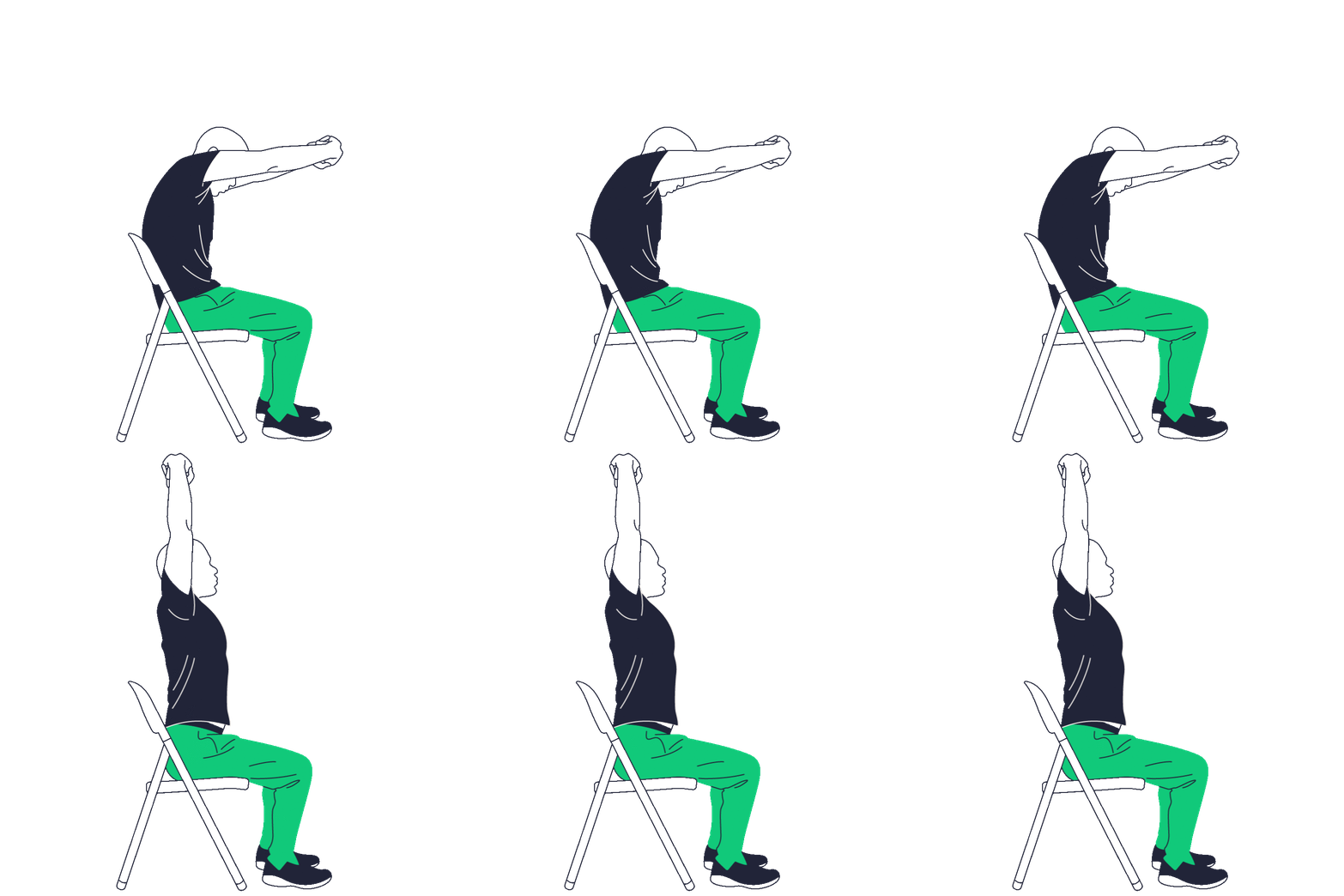
Tune in, every so often, to how your body actually feels — the tight shoulders, the tension headache starting, the ache from sitting too long. It’s easy to file these away as background noise and power through. Try acting on them as soon as you notice them, rather than waiting until they’re loud enough to demand attention and you will reap the benefits longer term.
How about 10 minutes of At desk back care | YoPO
or Help for headaches | YoPO ?
5. Make time for joy
Joy isn’t a luxury — it’s fuel. Even ten minutes of something that genuinely lifts you can shift the rest of your day: playing with your kids, a few minutes with a pet, a track that makes you feel something, or simply picking up a hobby you enjoy. These moments don’t need to be earned or scheduled around everything else — try building at least one in per day, on purpose.

6. Log off, and get a proper night’s sleep
When the working day ends, let it end — properly logging off rather than leaving one tab open “just in case.” And prioritise a proper night’s sleep. Sleep is where all of your other self care efforts are consolidated; it’s very hard to sustain energy or patience on too little of it.
Why it’s worth it
None of this is about self-indulgence, and it isn’t about deprioritising the people who depend on you. It’s the opposite: showing up properly for your work and for the people around you — colleagues, family, whoever needs you — requires you to have something left to give. A day spent looking after yourself first is, in a very real sense, a day spent looking after everyone else too.
A note for employers
Much of today’s challenge depends on flexibility that not everyone has by default — the ability to shift a start time, take a proper lunch break, or log off without guilt. Where employers actively support that flexibility, rather than merely permitting it, and when managers and business leaders model healthy habits themselves, self-care stops being something employees have to fight for and becomes something the culture genuinely enables.
Helen Withers, Director, YoPO Wellbeing Limited
If you would like any further information on this update or to request access to YoPO’s bank of wellbeing resources for desk workers, please contact hello@yoponow.com.
References
- Mainsbridge CP, Cooley D, Dawkins S, de Salas K, Tong J, Schmidt MW and Pedersen SJ (2020) Taking a Stand for Office-Based Workers’ Mental Health: The Return of the Microbreak. Front. Public Health 8:215. doi: 10.3389/fpubh.2020.00215
- How yoga, meditation benefit the mind and body (medicalnewstoday.com