
DESK WORKER NUTRITION
Food that works as hard as you do.
The YoPO meal system is built for busy people who spend most of their working day at a desk. Quick to prepare, genuinely satisfying, and designed to keep you feeling good from your first meeting to your last. Aim to use this system for as many desk days as you can. On non-working days eat what you love and take your time to enjoy the preparation.
- Steady energy
- Sharper focus
- Prep in under 10 minutes
Autumn breakfasts
7 autumn breakfasts
Quick stretch:
Autumn breakfasts
Seven ideas for autumn breakfasts
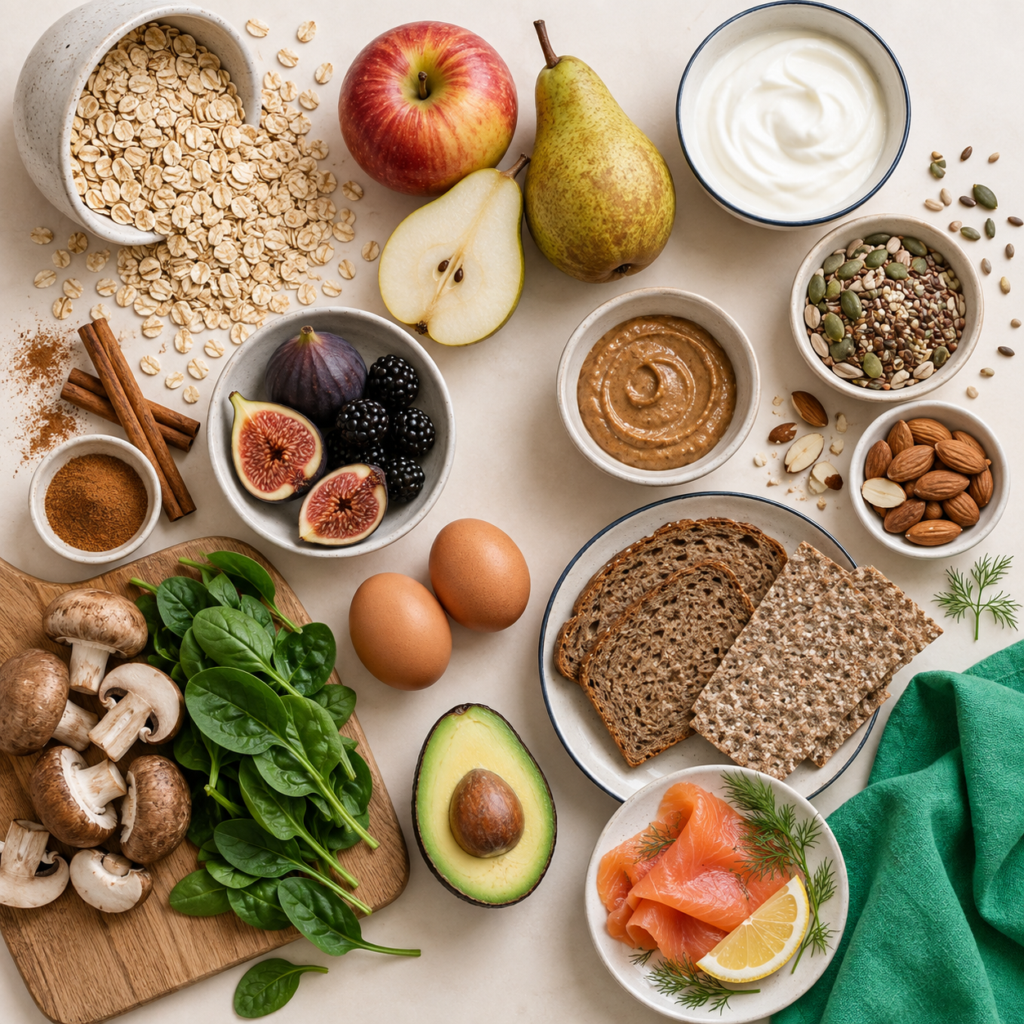
Breakfast needs to pack a nutritional punch and keep you energised and focussed all morning. These ideas all provide protein, plus slow release energy, alongside a broad spectrum of essential nutrients to get your day off to a good start. If you are "not a breakfast person", most of them can be transported to eat later. It is well worth thinking ahead to avoid unhealthy snacking or making poor choices at lunch time due to being too hungry.
Autumn dinners
7 autumn dinners
Quick stretch:
Autumn dinners
Seven ideas for autumn dinners
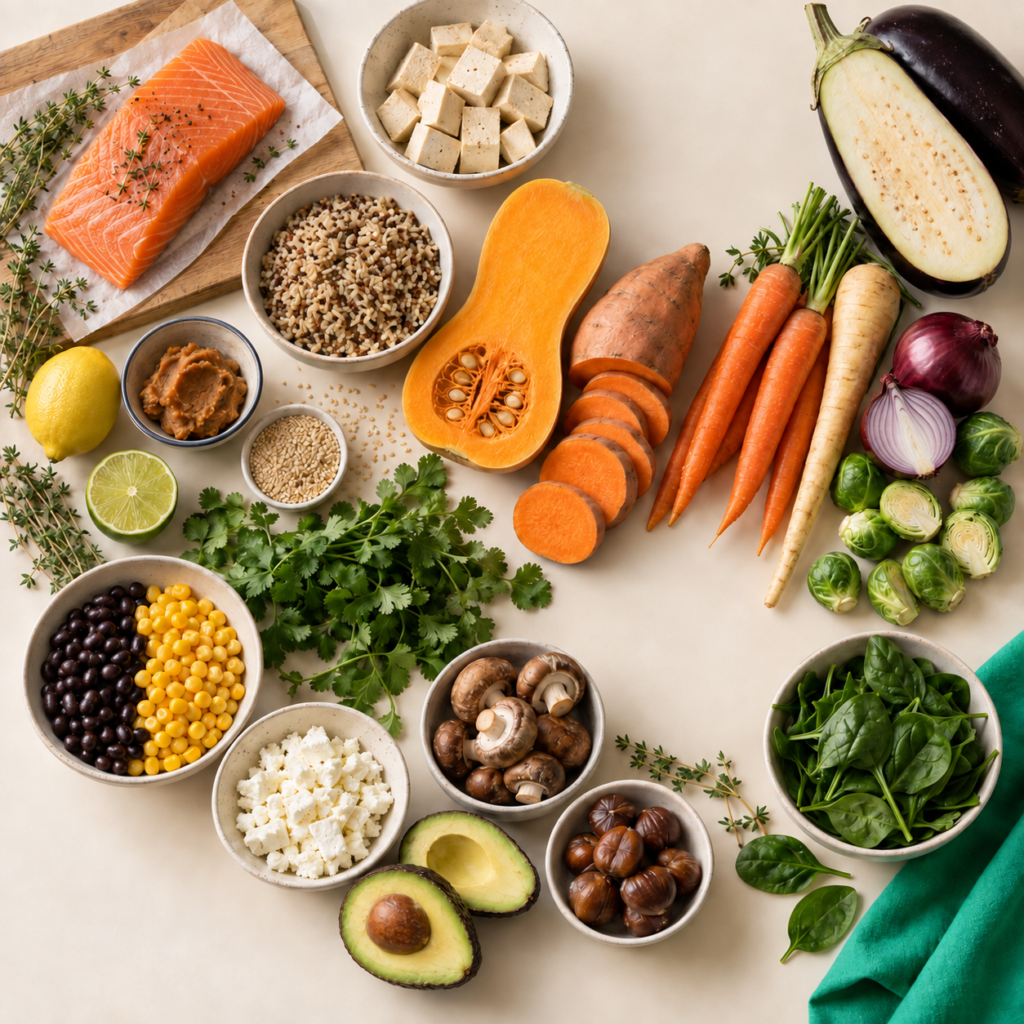
Dinner on workdays needs to be quick, easy, nutritious and not too heavy, particularly if you are eating later in the evening. Here are 7 ideas which fit the bill. Most can be prepared in a maximum of 10 minutes, and if any cooking is needed it is for less than an hour (most less than 30 mins) with no supervision required so you can be doing other things. All dishes are flexible with options offered to suit your preferences and some have a choice of protein - chicken, fish, tofu etc to be added to a base meal.
Autumn lunches
7 autumn lunches
Quick stretch:
Autumn lunches
Seven ideas for autumn lunches
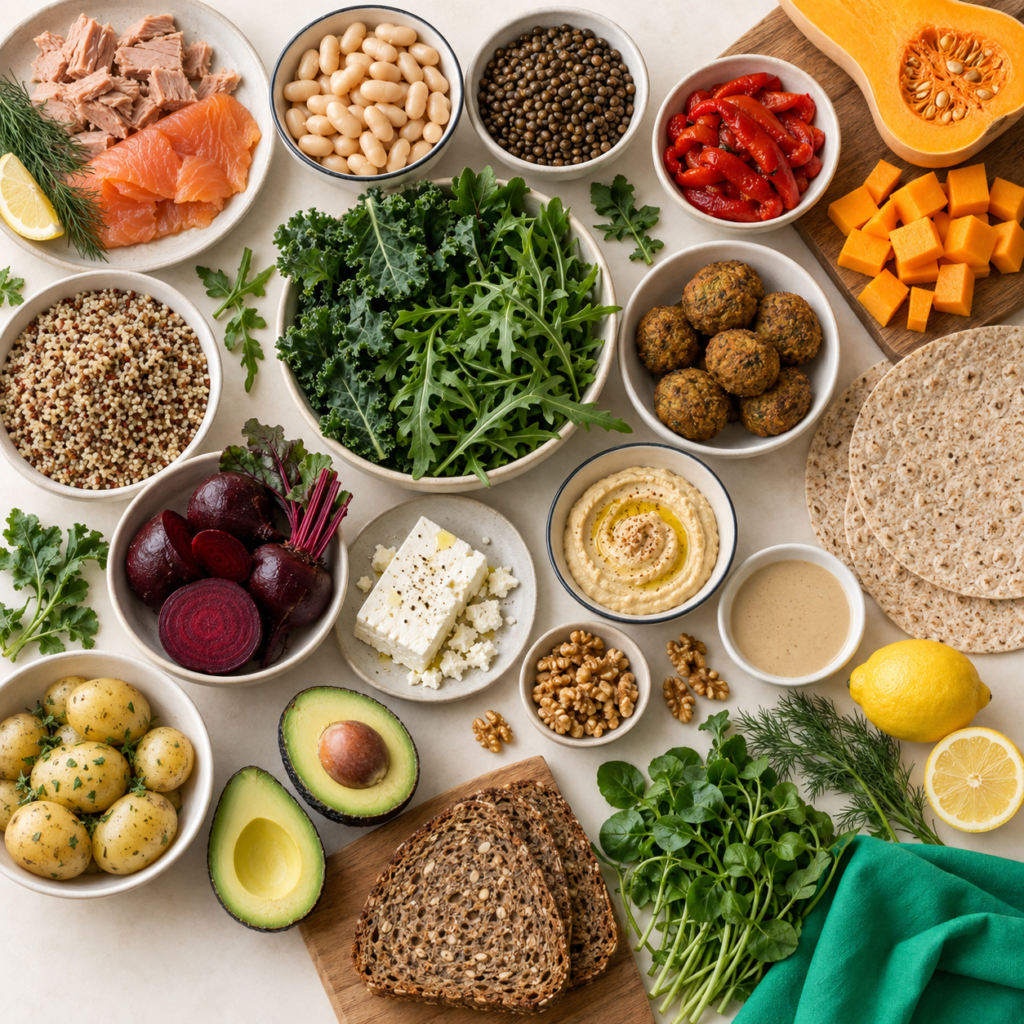
Lunch on days at the desk needs to be light to avoid the afternoon slump, but nutritious to help you maintain focus and satisfying so that you're not tempted by unhealthy snacking options that may be on offer. Here are 7 ideas for autumn lunches that are quick and easy to prepare at home - some include a pre made option available in supermarkets.
Autumn snacks
7 healthy snacks
Quick stretch:
Autumn snacks
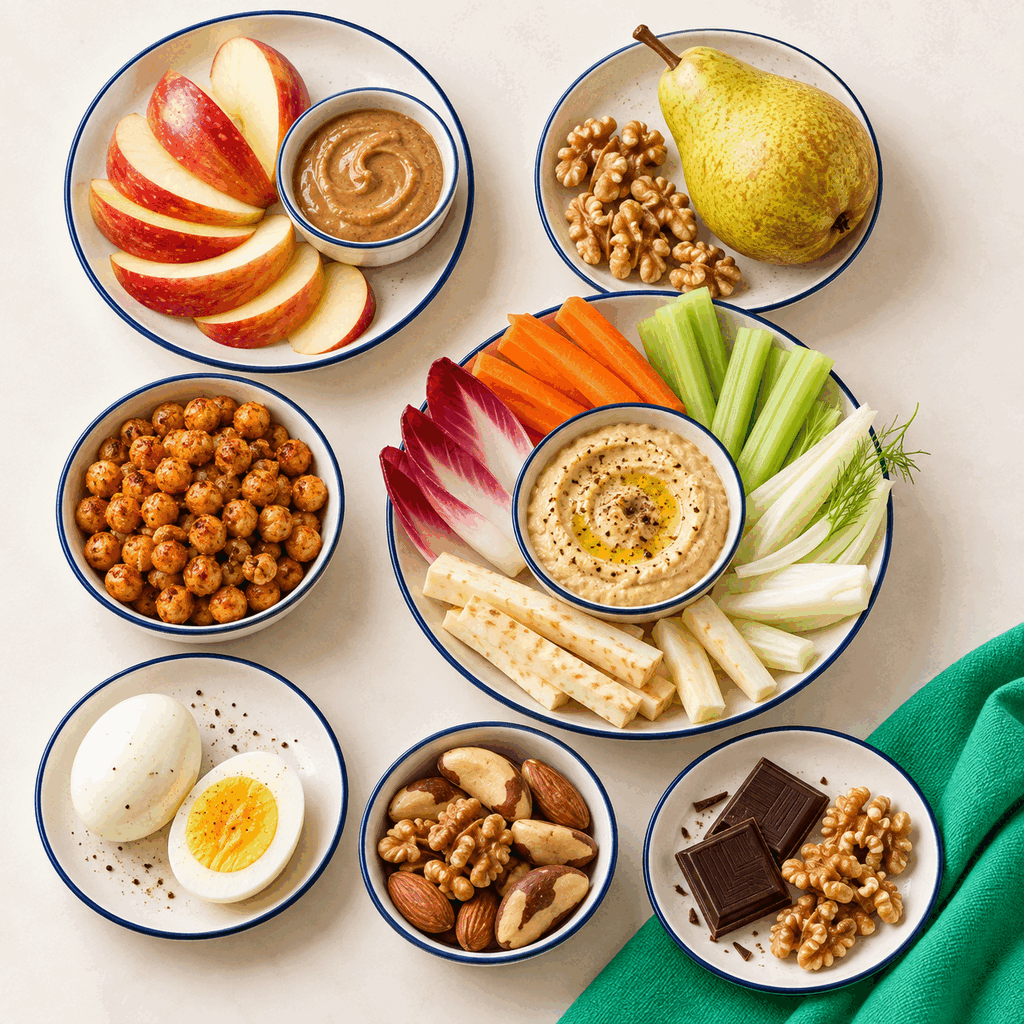
7 ideas for healthy snacks that curb your appetite and pack a nutritional punch
- Apple & Almond Butter — Slice a crisp autumn apple and dip into a tablespoon of almond butter.
- Pear & Walnuts — A ripe pear with a small handful of walnuts for crunch and healthy fats.
- Roasted Chickpeas (30g) — Lightly spiced and oven-roasted until crunchy — a good batch-prep snack.
- Hummus & Autumn Veg Dippers — Carrot, celery and chicory sticks with a small pot of hummus — swap in fennel or celeriac batons for something more seasonal.
- Hard-Boiled Eggs (x2) — Batch-cook at the start of the week for a grab-and-go protein hit.
- Mixed Nuts (30g) — A pre-portioned handful of almonds, walnuts and Brazil nuts.
- Dark Chocolate & Walnuts — Two squares of 70%+ dark chocolate with a few nuts of your choice.
Nutrition tips for energy
Gear up your energy by tweaking eating patterns
Quick stretch:
Nutrition tips for energy
Make sure you're eating enough
Choose slow-release carbohydrates
Include protein at every meal
Nutrition tips for stress
Focus on your diet and eating patterns to reduce anxiety
Quick stretch:
Nutrition tips for stress
Eat regularly — skipping meals makes stress worse
Erratic eating is a physical stressor in its own right. When blood sugar drops, your body releases cortisol — the same stress hormone triggered by a difficult meeting or a looming deadline. If you're already under pressure, skipping meals adds fuel to the fire.
Aim for three consistent meals a day and don't wait until you're running on empty. Feeling irritable, overwhelmed or unable to concentrate is sometimes just hunger in disguise.
Avoid sugar spikes when you're under pressure
Stress triggers cravings for sweet, high-carb foods — it's a genuine physiological response, not a lack of willpower. But sugary foods cause rapid blood sugar fluctuations that amplify anxiety and irritability, making a stressful day feel harder than it needs to.
Slow-release carbohydrates keep blood sugar stable, which directly helps keep your stress response calmer. On a difficult day, reaching for oats, wholegrain bread or lentils instead of a biscuit is one of the most practical things you can do.
If the craving wins — a small piece of dark chocolate is one of the better options. It satisfies the urge without a heavy sugar hit.
Eat a wide variety of foods to support your gut and brain
Your gut and brain are in constant two-way communication, and what you eat directly affects your ability to handle stress. A varied diet — with a wide range of plant foods, healthy fats and fermented foods — supports both gut health and the brain’s ability to regulate mood and emotions.
Variety is key. The more diverse your diet across the week, the better. Include plenty of vegetables, wholegrains, lentils and beans, nuts and seeds, oily fish and plain yoghurt. These foods work together to support a healthy gut microbiome and keep your stress response better balanced.
Watch caffeine and alcohol
Caffeine raises cortisol levels. On a calm day this is manageable — on an already stressful day it amplifies the physical stress response, increasing feelings of anxiety and tension. Try to keep it to mornings and notice whether it's making things feel sharper or just more frantic.
Alcohol feels relaxing short-term but disrupts sleep overnight, leaving you less resilient the next day. Stress and poor sleep compound each other quickly. On high-pressure weeks it's worth being more mindful of both than usual.
Herbal teas — particularly chamomile and peppermint — are a genuinely calming afternoon swap.
Try not to eat on the run
When you eat while distracted, rushed or anxious, you're less likely to notice when you're full and less likely to choose anything nourishing. Eating while stressed tends to mean eating the nearest thing rather than the right thing.
Even five minutes away from your screen to eat lunch makes a meaningful difference — to how satisfied you feel and to your stress levels for the rest of the afternoon. A proper lunch break is one of the most underrated stress management tools available.
When it's not possible — have something genuinely nourishing ready to go. Convenience and quality don't have to be in conflict if you've planned slightly ahead.
Nutrition tips for weight management
Eat good food (only) when you are hungry
Quick stretch:
Nutrition tips for weight management
Eat regularly
Missing meals feels like a shortcut, but it typically leads to stronger cravings later in the day and a tendency to overeat in the evening. Your body responds to restriction by ramping up hunger signals — often at the worst possible time.
Three consistent meals a day gives your appetite a rhythm it can work with. Regular mealtimes also make it much easier to tune into genuine hunger — because you’re not spending the day lurching between too hungry and too full, your signals become more reliable and easier to read.
If you’re genuinely not hungry first thing, wait until your hunger signal and then have a snack/breakfast later — something light like yoghurt, a piece of fruit or a handful of nuts is enough to stabilise blood sugar and reduce the likelihood of strong cravings before lunch. As your eating pattern becomes more regular, your morning appetite may return.
Tune into hunger signals — especially between and beyond meals
Once you have a regular meal pattern in place, the question is what’s driving any eating that happens outside of it. A lot of between-meal eating is habitual rather than hungry — something to do at your desk, a response to boredom or stress, or simply because "treats" are available.
A simple check: pause before reaching for something and ask whether you’re genuinely hungry or just looking for a distraction. If it’s the latter, that’s useful to know — not a reason to feel guilty, just something to notice. Over time, catching the difference between real hunger and habit is one of the most effective adjustments you can make.
Notice when you’re eating for other people, not for yourself
Social pressure to eat is real and often invisible. Finishing everything on your plate so as not to seem wasteful. Having a slice of birthday cake in the office because it would feel rude not to. Ordering dessert to keep someone company so they don’t feel self-conscious about their own choice. These are all forms of eating that have nothing to do with hunger.
None of this means you can’t join in — sometimes you genuinely want to, and that’s fine. The difference worth noticing is when you’re eating to manage someone else’s feelings rather than your own. A polite “I’m fine, thank you” is enough. You don’t owe anyone an explanation for what you do or don’t eat.
Focus on what you’re adding, not what you’re cutting out
Removing whole food groups tends not to work long-term. It creates a sense of deprivation that’s hard to sustain and often leads to swinging between restriction and overeating. A more effective approach is to ask what you could add to a meal to make it more satisfying and nutritious.
More protein and fibre at each meal tends to keep hunger in check for longer. More vegetables on the plate means more volume for fewer calories. These aren’t rules — they’re small adjustments that add up over time without feeling like a diet.
Think about the quality of what you’re eating, not just the quantity
Calorie counting tends to focus attention on how much you eat, but the quality of those calories matters just as much. A meal built around protein, fibre and whole foods keeps you fuller for longer than the same number of calories from processed or high-sugar foods.
Meals and snacks with genuine nutritional value — rather than ones engineered to be easy to overeat — do a lot of the work for you. You don’t need to be perfect. You just need most of your eating to be built around food that actually satisfies and nourishes you.
Make one small change at a time
Overhauling everything at once is exhausting and rarely sticks. Changing one habit per week — swapping an afternoon biscuit for something with more staying power, adding vegetables to a meal that usually doesn’t have them, eating lunch away from your desk and actually focussing on it — is far more sustainable than a complete reset.
Small changes that become habits are worth far more than dramatic ones that last a few days. If something works, keep it and add the next thing. If it doesn’t, try a different adjustment. Progress doesn’t have to look dramatic to be real.